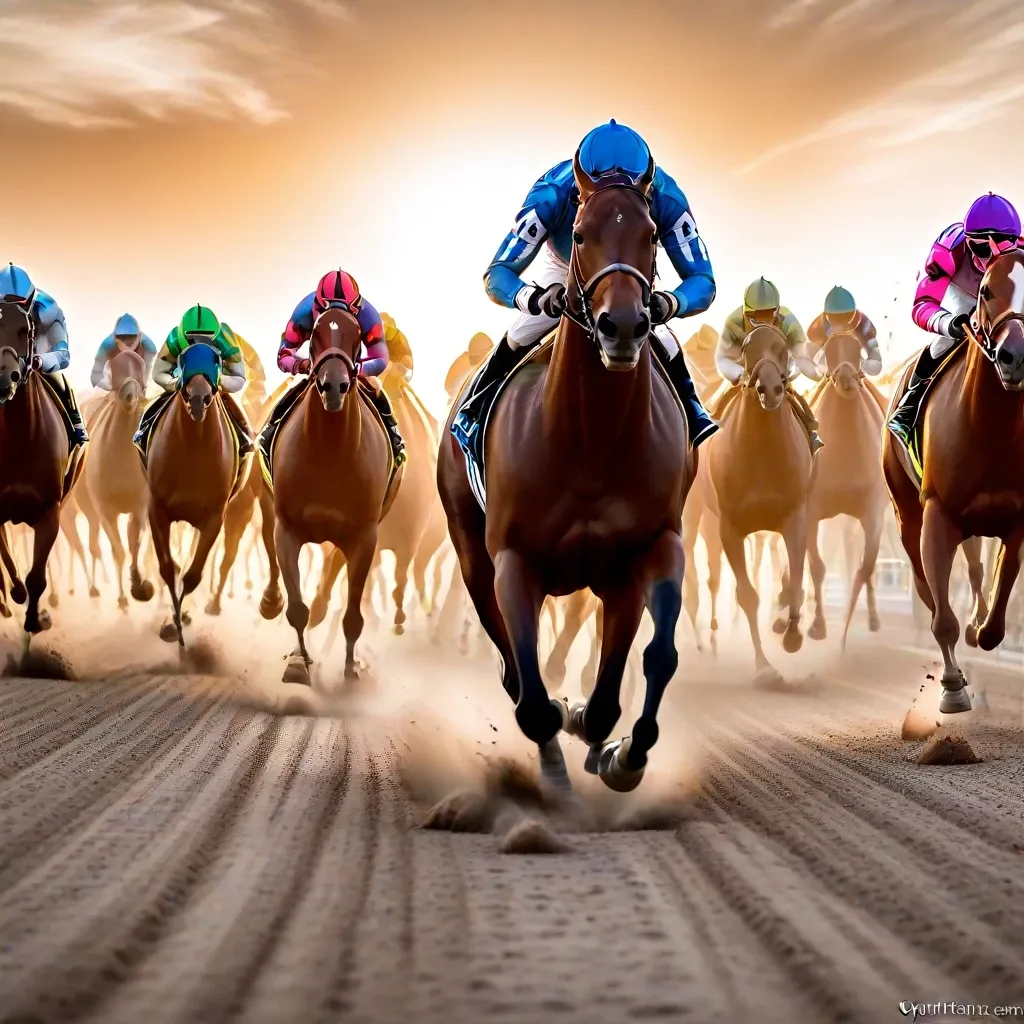
Imagine the roar of the crowd, the pounding of hooves, and the sheer exhilaration as a lone horse, a speck of color against the green, refuses to relinquish its lead. That’s the essence of a wire-to-wire victory in horse racing – a display of raw speed, unwavering stamina, and tactical brilliance that captivates racing fans worldwide. It’s a rare gem, a testament to a horse’s unrelenting desire to dominate from start to finish.
Wire-to-wire wins aren’t just about speed; they embody a complex interplay of strategy, horsemanship, and a touch of luck. The jockey must master the art of pace, the horse must possess the lung capacity and grit to maintain an advantage, and the conditions must align to favor a frontrunning style. The difficulty of achieving this makes it all the more special.
Many factors contribute to the making of a wire-to-wire champion. What are the qualities of the horse, the strategy of the jockey, and the external elements that come into play? Read on to discover what it really takes to lead a race from start to finish.
What is a Wire-to-Wire Win?
In the thrilling world of horse racing, a “wire-to-wire” victory signifies a unique and commanding performance. The definition of wire-to-wire is simple: it describes a race where a horse leads from the very beginning – the starting gate – all the way to the finish line. This means the horse is in first place at every single point of call during the race, whether it’s the quarter-mile, half-mile, or any other marker along the way.
Achieving a wire-to-wire win isn’t solely about raw speed; it’s a testament to a horse’s strategic prowess and incredible stamina. Unlike a come-from-behind victory where a horse surges forward in the final stretch, a wire-to-wire win demonstrates consistent dominance. It’s like leading a marathon from the very first mile and never relinquishing the top spot. The horse must possess the speed to break quickly, the strategy to maintain its position, and the endurance to hold off challengers throughout the entire race. This kind of win reflects a special combination of talent and unwavering determination.
Famous Wire-to-Wire Wins in History
Horse racing has seen its fair share of thrilling finishes, but few are as captivating as a wire-to-wire victory. A frontrunner seizing the lead from the starting gate and refusing to relinquish it, displaying unparalleled speed, stamina, and sheer determination — these are the moments that etch themselves into racing lore. Let’s gallop through some of the most iconic wire-to-wire wins in history.
First, we cannot possibly overlook Secretariat’s legendary performance in the 1973 Belmont Stakes. Already a Kentucky Derby winner and Preakness Stakes champion, Secretariat was aiming for the coveted Triple Crown. And he didn’t just win; he decimated the competition. Breaking sharply, he established an early lead and then just kept going, and going, and going. His final time was a blistering 2:24, a record that still stands. The sheer dominance, the widening gap with each stride, it was a performance that transcended sport and became a cultural phenomenon. Secretariat didn’t just win the Belmont; he conquered it.
Then there’s the unforgettable Kentucky Derby triumph of Spend a Buck in 1985. Opting to forego the Preakness Stakes due to a lucrative bonus offered at Garden State Park, Spend a Buck focused solely on the Derby. Jockey Angel Cordero Jr. sent him straight to the lead, and Spend a Buck responded magnificently, holding off a late charge from Stephan’s Odyssey to secure the win. What made this victory remarkable was the strategic decision behind it. It was a calculated risk that paid off handsomely, showcasing how astute planning can trump conventional wisdom in the world of horse racing.
While not a Triple Crown race, the 2007 Breeders’ Cup Classic victory of Curlin deserves mention. Though Curlin often stalked the pace, in this race, he was sent to the front by jockey Robby Albarado. Curlin set a moderate pace and was challenged repeatedly throughout the race, particularly by Hard Spun but he never relented, showcasing his remarkable toughness and determination. It was a victory that cemented his status as one of the greats.
These wire-to-wire wins are more than just statistics, they are testaments to the incredible athleticism of these equine athletes and also to the human connections that guide them. They remind us that in horse racing, as in life, sometimes the boldest strategies yield the greatest rewards.
The Anatomy of a Wire-to-Wire Horse
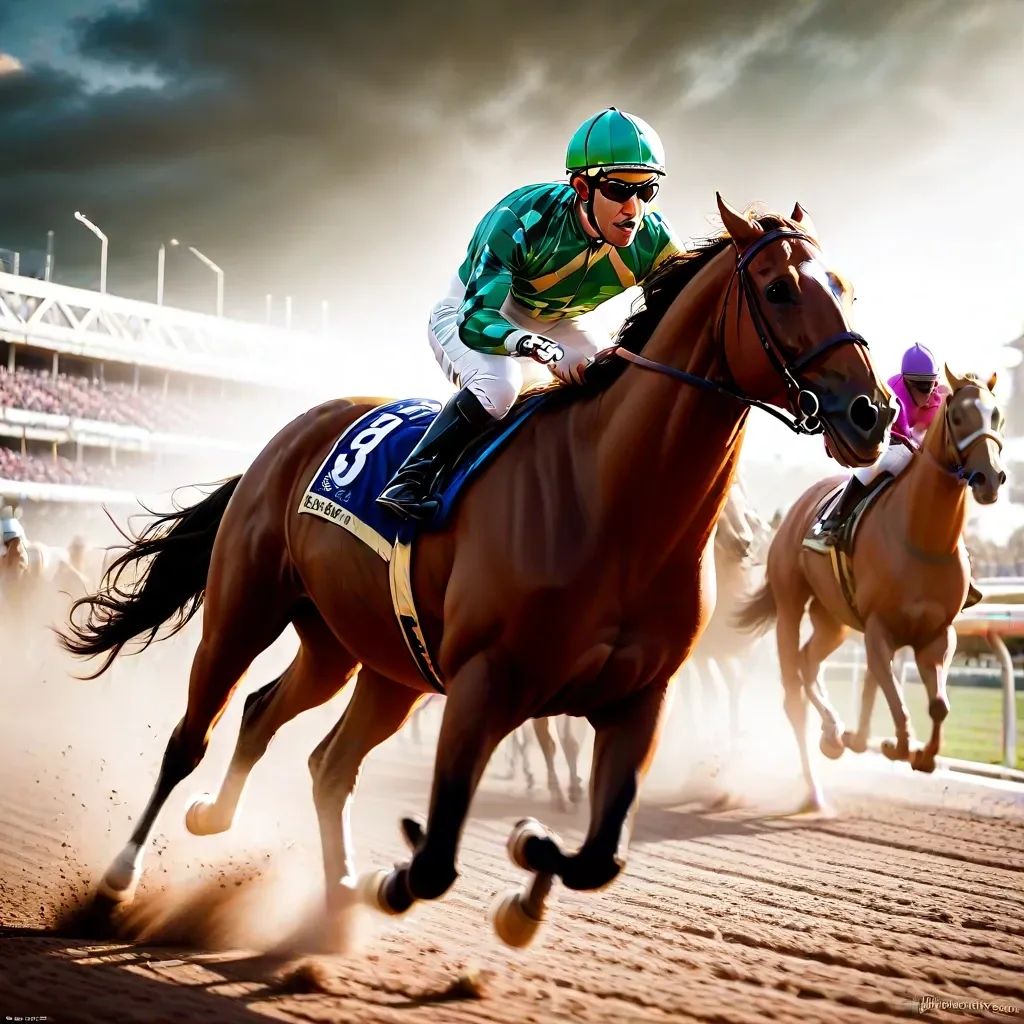
The allure of a wire-to-wire victory in horse racing captures the essence of dominance – a display of raw speed, unwavering stamina, and an unyielding spirit. But what precisely defines the anatomy, both physical and mental, of a horse capable of such a feat? It’s a complex interplay of factors that separates the frontrunners from the pack.
Physically, these thoroughbreds often possess a superior cardiovascular system, allowing for efficient oxygen delivery to muscles throughout the race. This translates to sustained speed from start to finish. Muscle composition also plays a crucial role. A higher percentage of fast-twitch muscle fibers contributes to explosive early speed, essential for seizing the lead. Furthermore, an advantageous stride length allows the horse to cover more ground with each gallop, conserving energy while maintaining a competitive pace.
However, physical prowess alone does not guarantee a wire-to-wire triumph. Mental fortitude is equally critical. A true frontrunner exhibits an exceptional willingness to compete, an innate drive to be at the head of the field. They must possess the mental toughness to withstand pressure from trailing horses, maintaining focus despite the challenges. Their ability to respond positively to the jockey’s cues, adjusting speed and conserving energy when necessary, demonstrates a crucial level of intelligence and responsiveness.
Consider, for example, horses known for their frontrunning style. One might observe their powerful hindquarters, indicative of strong acceleration, or their calm demeanor in the starting gate, suggesting a horse unburdened by pre-race jitters. It’s this combination of physical gifts and mental resilience that creates a true wire-to-wire contender: a horse built not just for speed, but for sustained, unwavering dominance.
Jockey Strategy and Tactics
The jockey is the on-field general in a wire-to-wire victory, responsible not just for guiding the horse but also for masterminding the entire race. A successful wire-to-wire ride isn’t about brute speed alone; it’s a chess match played at breakneck pace, demanding sharp decision-making every step of the way.
From the moment the gates burst open, the jockey’s strategy kicks into high gear. The initial burst is crucial for establishing early track position. A strong start allows the jockey to dictate the pace, ideally setting a tempo that suits the horse’s stamina and discourages rivals from making early moves. Pacing is an art; go out too fast, and the horse will fade in the final stretch; too slow, and the pack will swallow you whole. Understanding the nuances of the track itself – the surface, the sharpness of the turns, even the prevailing wind – is paramount. Some horses prefer a hard, fast track, while others excel on a softer surface. The savvy jockey uses this knowledge to their advantage.
But the race rarely goes according to plan. Other jockeys will challenge, attempting to box you in or force a faster pace. This is where a jockey’s tactical acumen truly shines. They must anticipate these moves, react decisively, and adjust their strategy on the fly. Conserving the horse’s energy is also vital. A skilled jockey can subtly rate their mount, urging them forward when necessary while allowing them to relax and breathe in between surges. It’s a delicate balance, a constant calculation of risk and reward. The jockey is the strategist, the pace-setter, and ultimately, the one who must guide their equine partner to the finish line ahead of the competition.
The Challenges and Risks
Attempting a wire-to-wire victory in horse racing is fraught with challenges. The most significant risk is burnout. Setting a blistering early pace can quickly deplete a horse’s energy reserves, leaving it vulnerable in the final stretch. Maintaining a sustainable, yet competitive, pace from the starting gate is a delicate balancing act.
The nature of competition itself presents a major challenge. A frontrunner becomes an immediate target, attracting pressure from other horses vying for the lead or strategically positioning themselves for a late surge. A horse can also get “boxed in” along the rail, limiting its maneuverability and escape routes if another horse challenges its position.
Track conditions significantly impact a frontrunner. A muddy track can tire horses more quickly, while extreme heat can lead to dehydration and decreased performance. Unexpected events, like a sudden downpour turning a fast track sloppy or even a minor bump from another horse, can disrupt a horse’s rhythm and throw off its concentration.
History is full of examples where wire-to-wire attempts crumbled in the final strides. Often, these failures are attributed to an unsustainable early pace or underestimating the stamina required given the track conditions. These experiences highlight the need that a horse can conserve enough energy to fend off challenges down the stretch if it wants to accomplish a wire-to-wire victory.
Training for Dominance
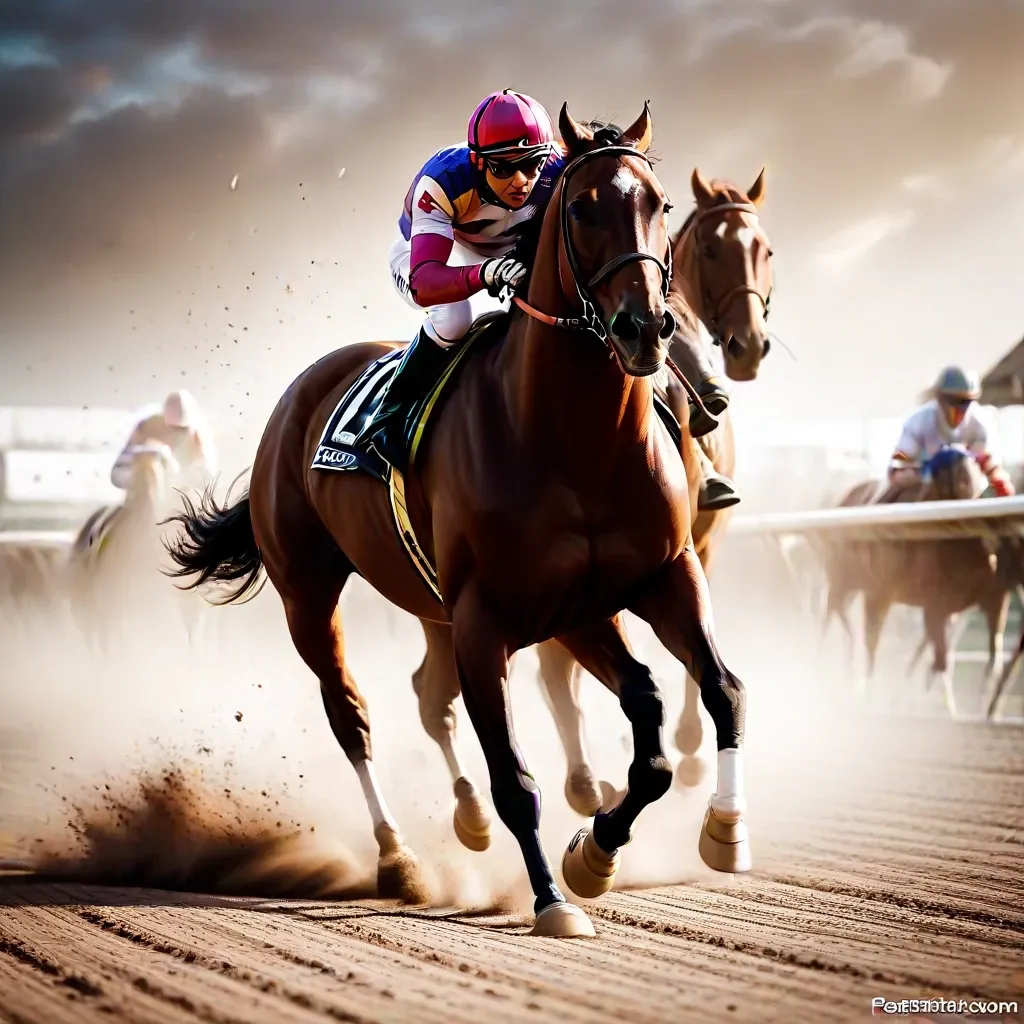
Transforming a horse into a frontrunner in horse racing demands a meticulous training strategy focused on developing exceptional speed, unmatched stamina, and unwavering mental fortitude. The journey begins with a carefully designed conditioning program tailored to enhance both early speed and sustained endurance, crucial elements for wire-to-wire victories.
Developing a horse’s inherent speed often involves “breezing,” short, controlled bursts of high-speed exercise. These are strategically incorporated to sharpen reflexes and build acceleration. Simultaneously, long gallops over extended distances are essential for building a solid stamina base. This dual approach ensures that the horse possesses the initial burst to seize the lead and the cardiovascular capacity to maintain it throughout the race.
Interval training plays a pivotal role in this specialized conditioning. By alternating between high-intensity sprints and periods of recovery, the horse’s anaerobic threshold is gradually raised, allowing it to perform at peak levels for longer durations. Equally important are nutrition and rest. A carefully balanced diet rich in essential nutrients fuels the horse’s intense workouts, while adequate rest allows for muscle recovery and prevents overtraining. Specialized equipment, like weighted blankets or resistance boots, might be used to increase muscle strength. Trainers also use techniques like monitoring heart rate and blood lactate levels to fine-tune the training intensity and ensure the horse is progressing optimally. This multifaceted training approach molds a horse into a formidable frontrunner, ready to command the race from start to finish.
Analyzing the Data: Identifying Potential Frontrunners
Unlocking the secret to spotting a wire-to-wire contender requires a plunge into data analysis. Handicapping isn’t just about luck; it’s about dissecting a horse’s history to predict its future performance. The key lies in identifying horses with a penchant for early speed, unwavering consistency, and the grit to maintain a lead.
Begin with speed figures. These numbers offer a snapshot of a horse’s raw talent, adjusted for track conditions. Look for consistently high figures, especially in the early stages of a race. Next, examine pace ratings. A horse that consistently sets a fast early pace is a prime candidate. Don’t ignore trip notes. These short race summaries often highlight tactical advantages or disadvantages a horse experienced, providing clues about its running style and preferences.
Consider the influence of external factors. Track conditions play a pivotal role; some horses thrive on fast tracks, while others prefer a bit of mud. Distance is equally crucial. A horse might excel at sprints but lack the stamina for longer races. Finally, assess the competition. A frontrunner might dominate weaker fields but struggle against tougher opponents.
Imagine this: a horse named “Rapid Fire” consistently clocks impressive early speed figures, demonstrated a high placement in its previous races and benefits from a fast track. That is a perfect candidate. By meticulously analyzing these factors, you can significantly improve your handicapping skills and identify the potential wire-to-wire winners in any race.
The Future of Wire-to-Wire Racing
The landscape of horse racing is poised for a thrilling evolution, and the wire-to-wire victory—that breathtaking display of speed and stamina from start to finish—will be significantly impacted. Technology is set to play a pivotal role. Expect to see wearable sensors providing real-time biometric data on horses, informing training regimens and race strategies like never before. Advanced data analytics will dissect every stride, uncovering hidden advantages and predicting optimal race pace for frontrunners aiming for the ultimate wire-to-wire triumph.
Breeding strategies, too, will adapt. Genetic testing might identify horses predisposed to early speed and exceptional endurance, potentially leading to a new generation of specialized frontrunners. Rule changes or track modifications could emerge, consciously designed to either encourage or hinder wire-to-wire attempts, adding a layer of strategic complexity to the sport.
While the future is uncertain, the allure of the wire-to-wire victory remains undiminished. It’s a testament to raw power, strategic brilliance, and a touch of daring—a spectacle that will continue to captivate audiences for generations to come. The sport is changing, but the thrill of the frontrunner holding on for glory? That’s timeless.